
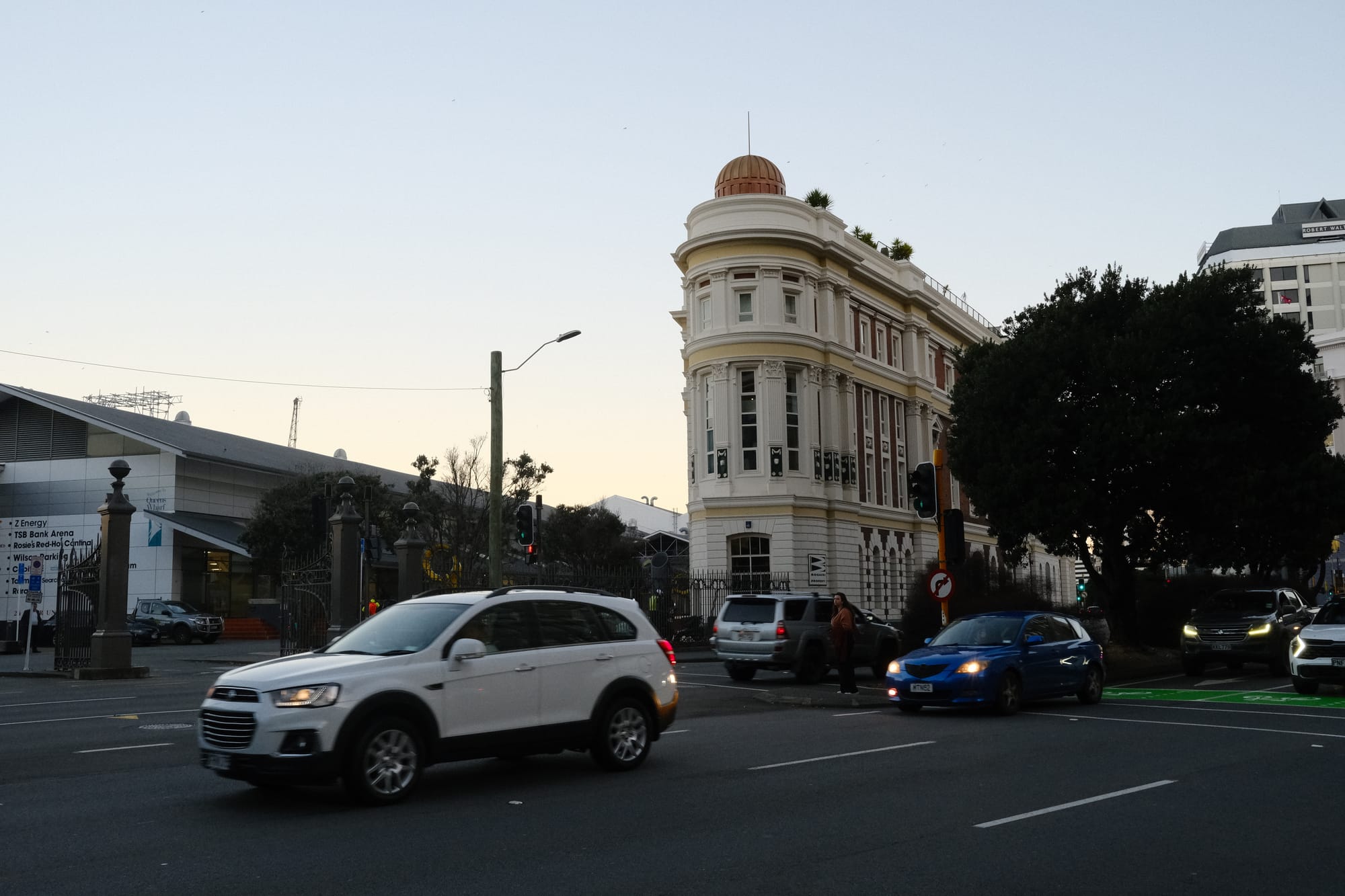
The Harbour Quays crisscross some of Wellington’s most iconic destinations.
Tākina, the Wellington Museum, Te Ngākau Civic Square, our wonderful waterfront, and of course, Te Papa.
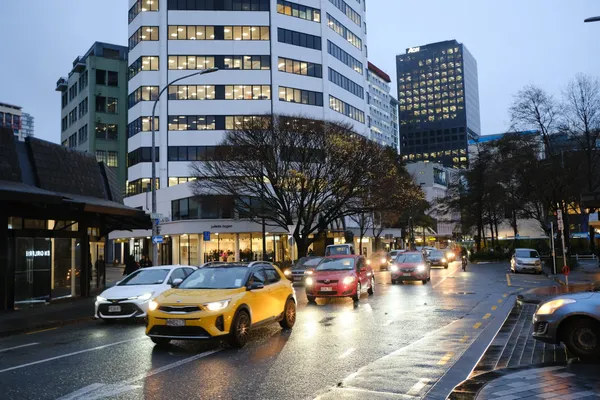
So why on earth is there no public transport access on this six lane arterial route that splits the central city from our stunning coast?
I’m clearly not the only one staring incredulously at this gaping hole in our public transit network. Finally, the Regional and City Councils are consulting on bus lanes on the Harbour Quays. This arterial route has a long history of being crucial for public transport, and it’s time for it to pull its weight again.
Consultation has now opened on this project and changes to the East's bus stops, and it’s your time to have a say on it.
I’m personally very horny for bus lanes – they’re cheap, practical, and effective infrastructure. But the story behind this bus lane is complex.
The Harbour Quays bus lane project is compromised by funding cuts from the Beehive and the previous Council. It outperforms the proposed highway expansion which costs 345 times more to build. Although it’s lacking in some ways, it’s a project designed to improve central Wellington, rather than compromise it.
The history of the Harbour Quays
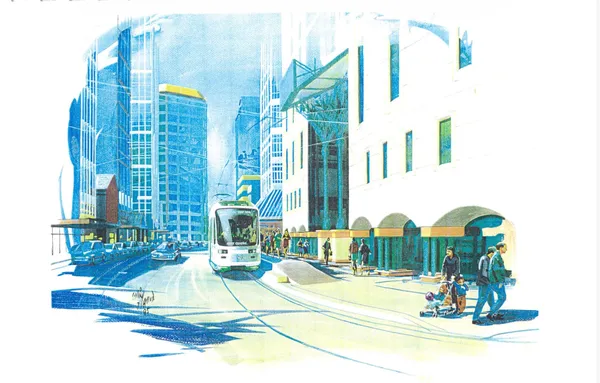
A century ago, the Harbour Quays were radically different. Tram tracks traversed alongside tyres. It was an arterial connection for private and public transport.
The lines were removed and more car lanes moved in. Growing congestion north of Ngauranga was funnelled between the waterfront and the central city. The more people opted to drive, the worse the traffic got.
Now, it is a six lane behemoth that’s a real pain to walk across to access the waterfront. Meanwhile, the Golden Mile absorbed all the public transport traffic. Two kilometres of a single road has been forced to hold 100 buses every hour at peak times, carrying tens of thousands of people to and from work every day.
The Golden Mile can’t cope. It can only sustain 80 buses an hour: it's already overcrowded. If nothing is done, the Golden Mile will soon have 120 buses an hour at peak times, leading to slower, suckier bus services.
We want and need more people taking public transport, which means the region needs more bus lanes. Cramming more people into the same stretch of road won't work.
And so, everything old is new again. The Harbour Quays was once the second spine for our marvellous tram network, and soon it could be born again for our marvellous bus network.
The project itself
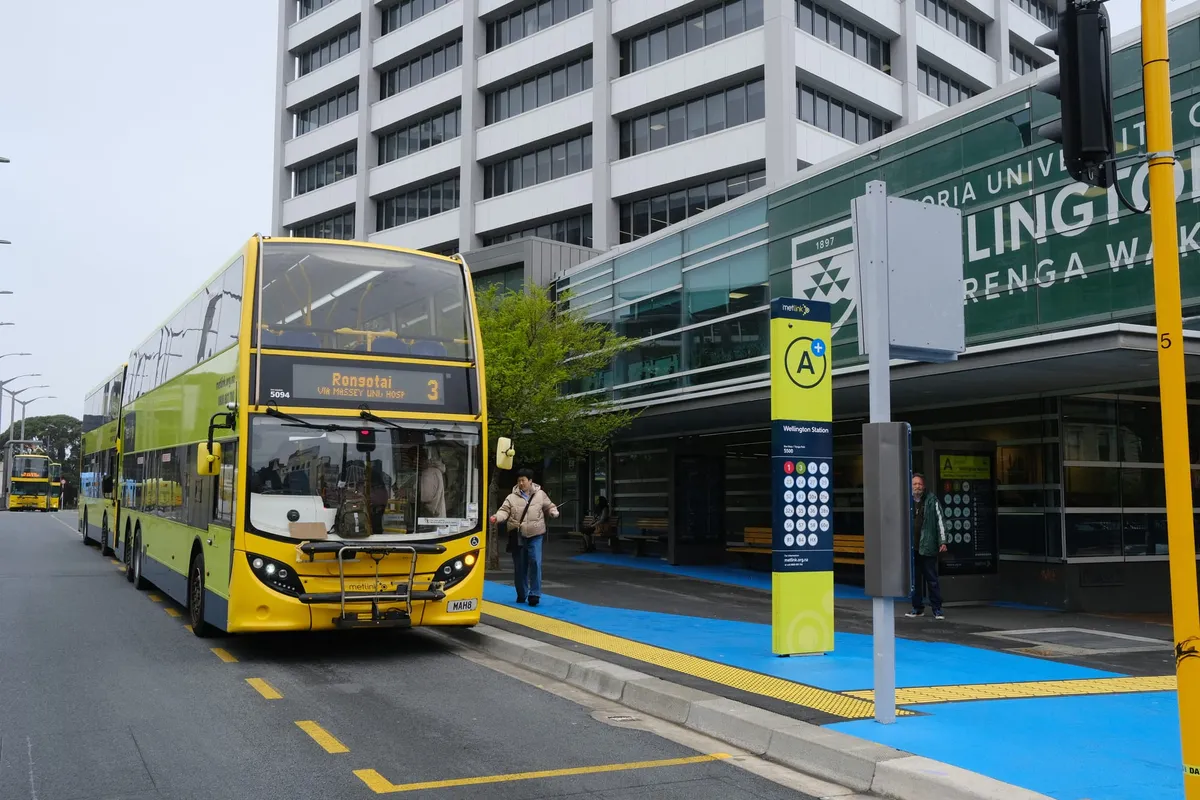
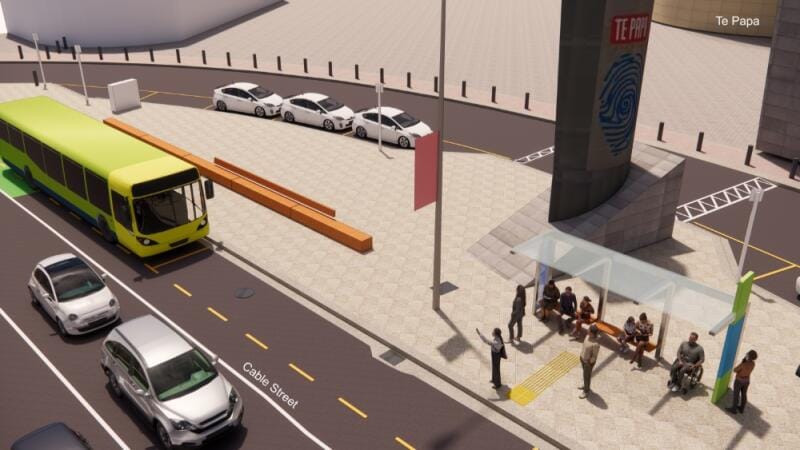
The Regional and City Council want to change one lane each direction of the Harbour Quays into a peak hour bus lane. 10 new stops would be added to the road, including at Tākina, TSB Arena, and Te Papa.
This is a compromised vision of what Wellingtonians were first promised. Under Let's Get Wellington Moving, this would have been an interim bus lane as we worked to bring trams back to the capital. It would have cost ~$51m. Oh, how times change.
Since then, Simeon Brown yanked public transport funding to (partially) pay for his expensive big boy roads, and Wellington City Council was left to foot the bill. When the Wellington Airport sale debacle happened, the previous council voted to slash bike lane and bus lane funding, including this project.
What was left was a compromised $11m budget to make the bus commute better for the tens of thousands of Wellingtonians who use it.
It won't come with quality wet weather shelter for some stops and will only operate at peak times.
It's not perfect, but it's a start. And like I said last year, I think once it's running, bus riders will push for better amenities. Its existence should encourage improvement.
Though the Harbour Quays bus lane is underfunded, it still punches above its weight. That's especially impressive considering what the Beehive is willing to burn money for.
Who we build for
I wanted to compare this project to NZTA's State Highway 1 changes: a second Terrace and Mt Victoria Tunnel. I had to pinch myself. Bargain basement bus lanes can deliver better time savings than a $3.8B urban highway looming over Wellington.
When the Harbour Quays gain bus lanes, bus trips will be seven minutes faster on the Harbour Quays, and a minute faster on the Golden Mile.
Compare that to the State Highway 1 changes. Two massive tunnels encouraging driving from north of Wellington will save four to six minutes from Ngauranga to the Hospital.
And those two tunnels cost over three hundred times more than some paint on an existing road.
The State Highway 1 changes are barely worth the economic benefit – $0.80 to $1.20 for every dollar we spend. Compare to the Harbour Quays, which deliver $3.70 of economic benefit for every dollar we spend.
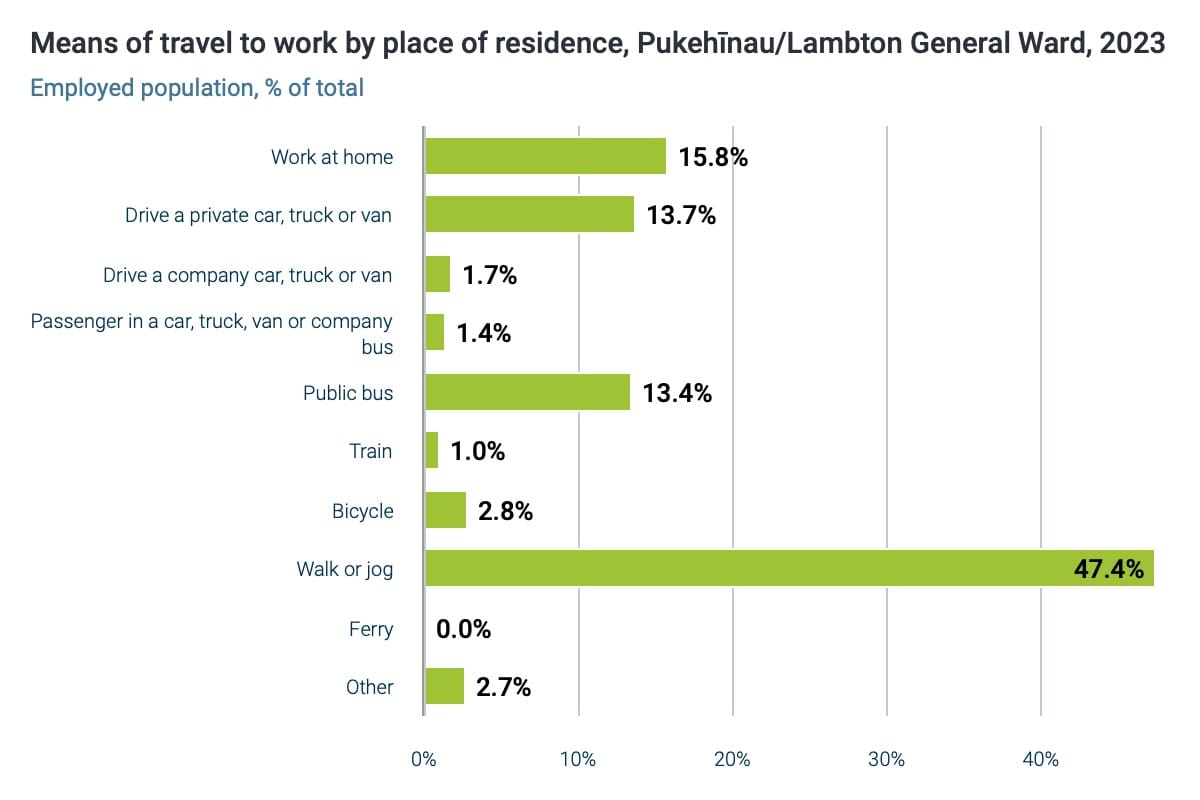
The only downside is for drivers, but the downside is muted. These changes remove a few car parks and make the average drive a little longer. Removing a whole lane each way in peak traffic adds just 80 seconds of travel time to the average journey. Meanwhile, buses move half of Wellington City's commuters on key corridors during rush hour, but make up less than 2% of the vehicles. Seems a fair trade.
These lanes have become a symbol to me. They represent a method of transport planning that genuinely addresses the needs of Wellington City: practical, low carbon, good value.
It also transforms public space to match the behaviour of central Wellington citizens who by and large walk, bus, and bike to work.
It's a stark foil compared to a second Terrace and Mt Vic Tunnel: perfectly designed to worsen central Wellington to help politicians escape to the airport a few minutes faster.
Yes, it’s compromised. Yes, I’m frustrated that Simeon Brown defunded it and the last Council cut its budget to protect Wellington Airport.
Despite it all, I'll be so pleased to see the Harbour Quays restored to their original purpose: an arterial route for public and private transport.
Practical public transport projects like these deserve the lion's share of transport funding. Maybe Ministers should take a page out of our Council’s book and make practical improvements, rather than burning money on boondoggle Roads of National Significance.
Let this be the beginning of a bus lane bonanza.