
I cycled to the mighty Petone foreshore from Wellington City for the very first time on Sunday.
I’ve never tried this journey before, because it felt like a daredevil decision. Anyone trying to walk or bike through Ngauranga was bedfellows with vehicles travelling 100km/h mere metres from your fragile body.
That is, until about a week ago.
Our train tracks and State Highway 2 are now protected by a seawall and shared walking and biking pathway known as Te Ara Tupua. It has become an instant hit.
This small stretch of pavement has made it possible to bike from Te Aro to Pito-One on protected bike lanes, 10km each way.
My ride started pretty: the harbour glistened to my right while buskers and kids at Frank Kitts Park exuded energy on my left. The waterfront is my favourite place to be.
What was once a giant car park is now the beating heart of the capital. Wellingtonians fought hard to make the waterfront a destination rather than a car storage area. The naysayers rallied, as they always do, to stop it. They failed.
Thank God they did. Locals and tourists alike delight in this place.
Time makes the radical normal.
After the waterfront, I rode through Thorndon Quay. The anticipation bubbled in me the further north I went. La Cloche was full. Every pole outside the cafe was engulfed by bikes. Half a dozen leaned against the wall because there was nowhere else to put them. I’ve never, ever, seen it like that.
Along Old Hutt Road, the path degraded. The shared path squeezes cyclists and pedestrians onto a footpath too small for current demand. Cycle Wellington’s proposal for an improved Old Hutt Road is smart. Councillors should take note.
To the right, sparse shrubs shroud the six lane behemoth known as the Wellington Urban Motorway.
The concrete pillars holding up the monolithic motorway have a brutalist beauty. But in the eyes of this climate nerd, it’s also a monument to the hubris of 20th Century planners.
In the 1960s, this motorway callously carved its way through thousands of graves and hundreds of people’s homes. It starved our train network of passengers. It is responsible for tens of thousands of tonnes of pollution every single year.
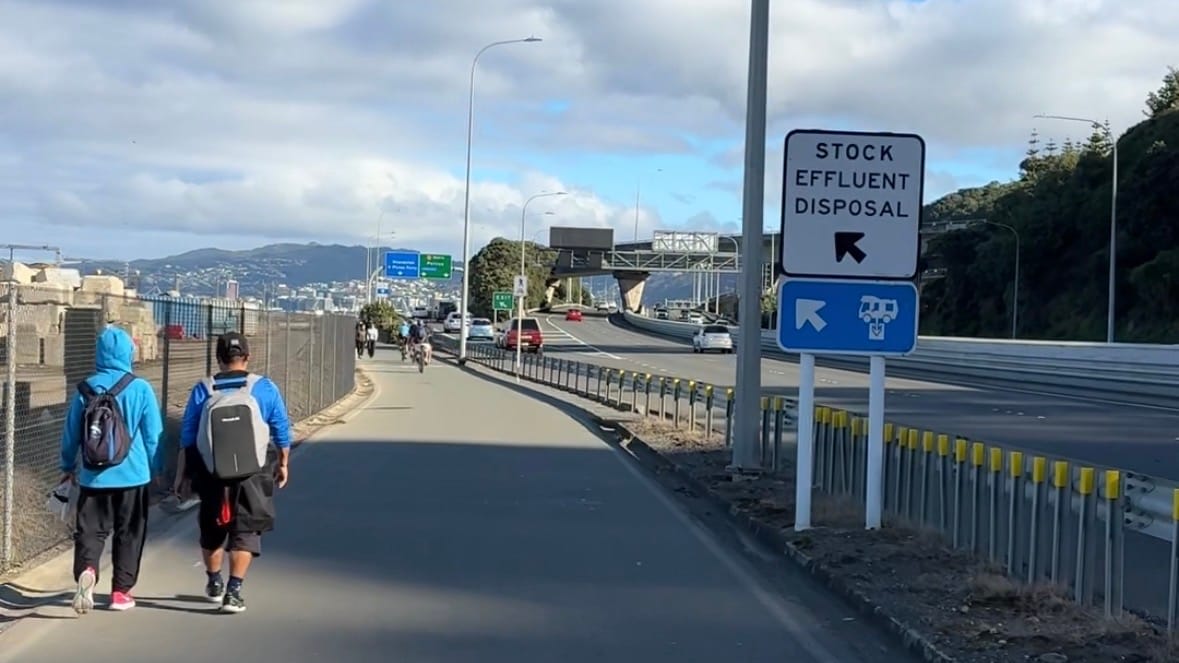
Wellington has been defined by this motorway. It’s only fitting that I had to pass under its shadow as I reached the next path that will define transport in our region.
Te Ara Tupua.
This smooth pathway has been raised from the choppy harbour to protect the rail and connect Petone. To the right, Matiu Somes Island dots the blue. It shows clear as day how tightly our region grips to the edge of a cliff face.
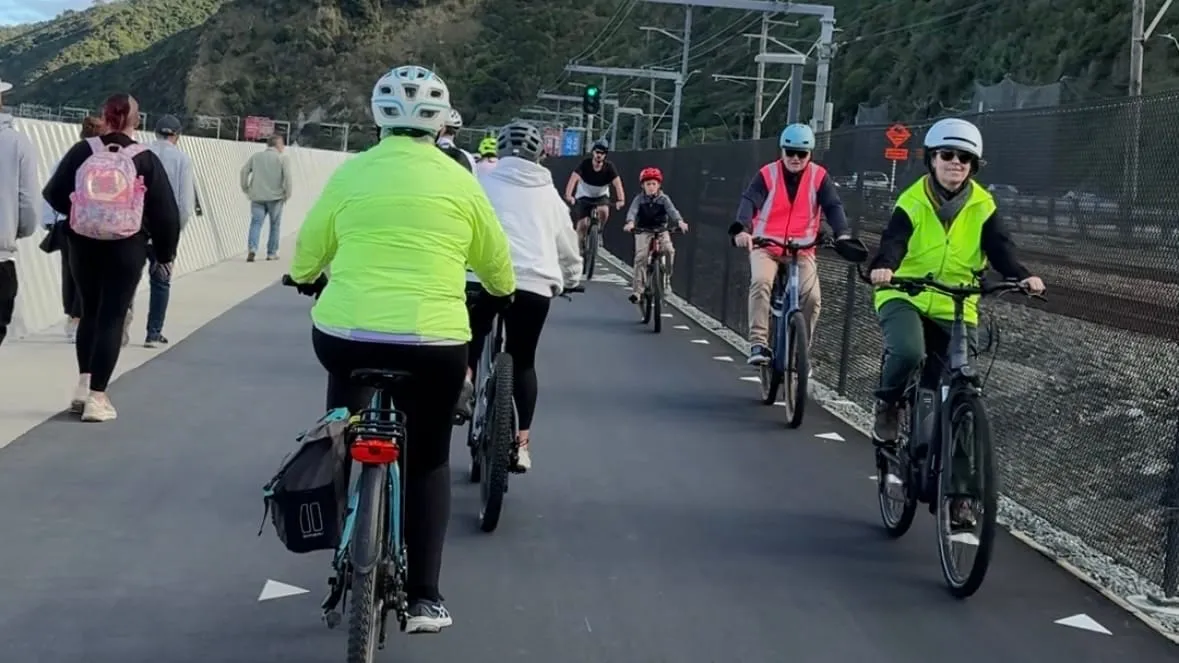
As I started along this brand new track, I was astounded. Not only was it remarkably adorned with toi Māori art. It was packed with people.
Families crowded the bridge above the railway lines. Up the top, walkers soaked in the view of Wellington City you can only steal a glance at while driving.
The further along I went, the more jaw-dropping it was. I haven’t seen that many people on bikes since I was in Copenhagen in 2023. I got stuck in congestion, in a bike lane! In New Zealand!
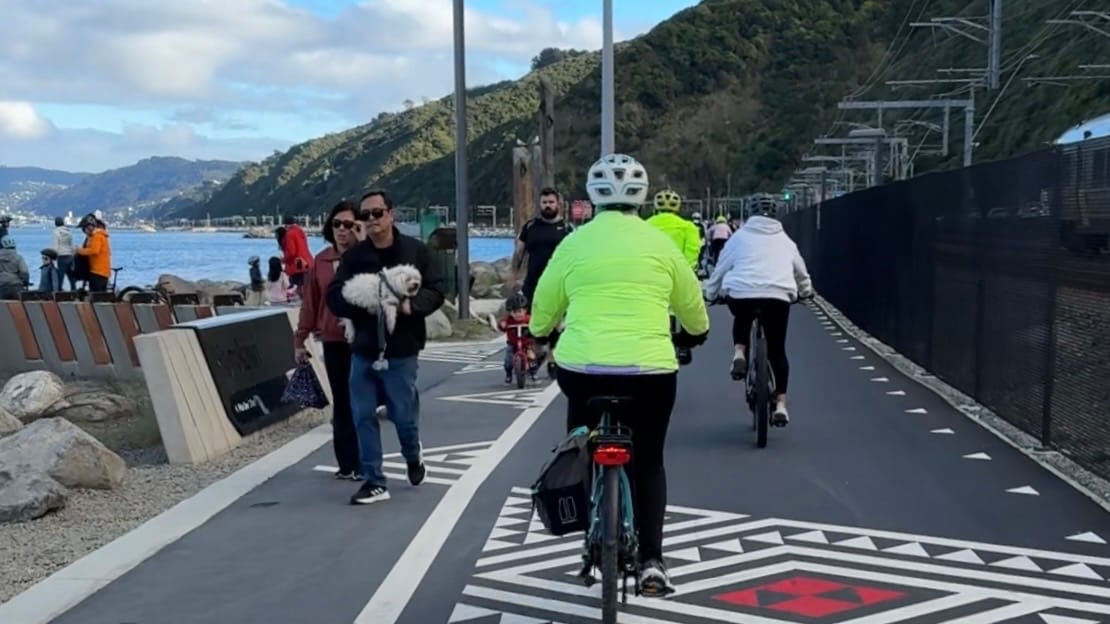
I nearly cried with joy because it wasn’t just the stereotypical very serious cyclist type.
This unassuming seawall with a pathway plopped on top has achieved what should be the gold standard for transport infrastructure. It’s good enough that parents let their kids use it independently.
Kids as young as two were riding on their own tricycles. Parents pushed prams along the walking path. Wellingtonians rolled along on wheelchairs. At every rest area, smiling families looked out towards the water or back towards the train tracks. The energy of such a family friendly space is infectious.
On my whole bike journey, I was grinning like a village idiot. A train rushed past and I burst into giddy laughter. At face value, this is just a walkway protecting a rail line. But it’s also so much more than that.
What was once an inaccessible motorway is now a vibrant play space for children. Wellingtonians fought hard to make Te Ara Tupua a destination rather than a bottleneck bereft of potential.
The naysayers rallied, as they always do, to stop it. They failed.
Thank God they did. One week on from its opening, locals and tourists alike delight in this place.
To me, this path is a taste of the world to come: where driving is an option rather than a requirement for everyone in our region.
It is radical, but time makes the radical normal.