

On a blustery night last week, National, ACT, and New Zealand First passed an awful piece of legislation.
This law, rushed through Parliament, bans New Zealanders from suing big companies for contributing to climate change and harming us all in the process. Z Energy and Fonterra, who lobbied for the law, can avoid a climate damages lawsuit they were actively fighting.
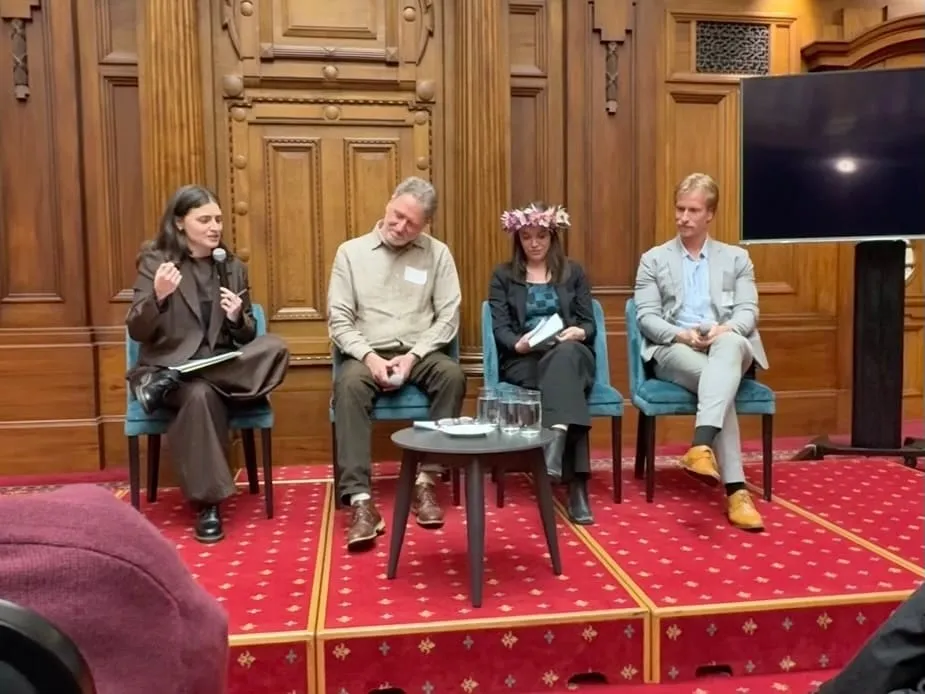
On that same night, my friend Liam and I sat in another part of Parliament to listen to an expert panel, hosted by Chlöe Swarbrick and the Green Party, discuss what credible climate policy looks like.
A novelist couldn’t have come up with a better foil. As the current government destroyed another part of our climate response, experts, politicians, and nerds sat and discussed what the hell we do.
I’ve been co-hosting similar events about conservation with Forest & Bird. These fireside chats, with experts behind a mic and good questions from an engaged crowd, are politics at its best.
Professor Ralph Chapman from the NZ Centre for Sustainable Cities spoke about the power of evidence and economics. The rapid growth of solar power in places like Europe or Pakistan is just one example of how the world is responding to the opportunities of climate action.
Pacific Climate Warrior Bethany Mataiti spoke about the power of telling community stories to change the world. The Marshall Islands showed that it can work. Their heartbreaking worries of losing their nation to the threat of rising seas helped the world be more ambitious. Because of them, the world aspired to limit global warming to 1.5 degrees in the UN’s 2015 Paris climate agreement.
Dr Sebastian Gehricke, Climate and Energy Finance expert at the University of Otago, sees policy as fundamental. Good policy makes climate risk visible: like requiring companies to disclose what climate change will cost them. Bad policy hides climate risk: like how New Zealand allows our biggest polluter, agriculture, to emit for free.
Between each expert’s answers, there was a missing link in credible climate policy.
It was revealed when a 31-year-old truck driver stood up to ask a question. She’d been driving her 1987 Hino across the country for years and had seen climate disruption first hand. Washed-out roads, cancelled ferry connections. The effects of an unpredictable climate are plain and simple.
She wants action, but isn’t sure what it means when her livelihood depends on diesel. The men in her industry don’t want to talk about the damage of fossil fuels.
Swarbrick responded with a story about her visit to the coal miners on the West Coast. Like all of us, the people of the Coast want job security. A way to stay in their community. A future where they can take pride in their skills. Coal was the only thing on offer. Calling for an end to coal mining felt like an attack on identity and family security.
We all know the feeling. Knowledge workers feel it staring down Silicon Valley’s obsession with cutting staff with AI. It doesn’t feel like a positive future if you lose your livelihood in the process.
And that was the missing link: credible climate policy must understand the deeper aspirations of our people, and help them keep those aspirations as we move off fossil fuels. It’s essentially a just transition: where the powerless in our society aren’t downtrodden by our move off fossil fuels.
For example, the future of sustainable freight is using fewer trucks and more trains. That transition would be easier if politicians provided a path for truckies to join our rail ranks, or support them into more local parts of distribution.
Instead, we have a Coalition that refuses to change the polluting system while telling communities government won’t pay for repairs when the next disaster strikes. This “every man for himself” mentality makes the transition harder.
Change is coming whether the Government wants it or not. Eventually, it will be impossible to replace the washed-out roads or insure the flood-prone homes. The question is how things change, not whether they do.
There’s the status quo: whiplashing from crisis to crisis with no strategy or safety net. Then there’s the more decent society: one where the Government has a clear vision for a pollution free economy, and takes action to get us there while helping communities through the change.
Done well, fireside chats seem to break down the “every man for himself” defensive crouch. They allow us to discuss the deeper fears and aspirations of our communities.
Right now, we’re stuck with nihilistic leaders that flout the rule of law, protect polluters’ interests, and feel no obligation to protect our people.
I want our Government to act like the Kiwi listening at that fireside chat. Where we aspire to great things, work together to achieve them, and help people through tricky but necessary transitions.
That’s the credible climate policy I’ll be seeking from every party this election.