
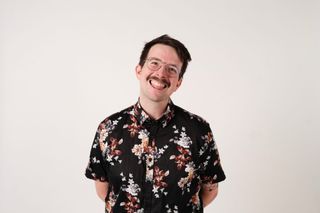
I’ve witnessed what I want for the future, nestled in Waitangirua Mall.
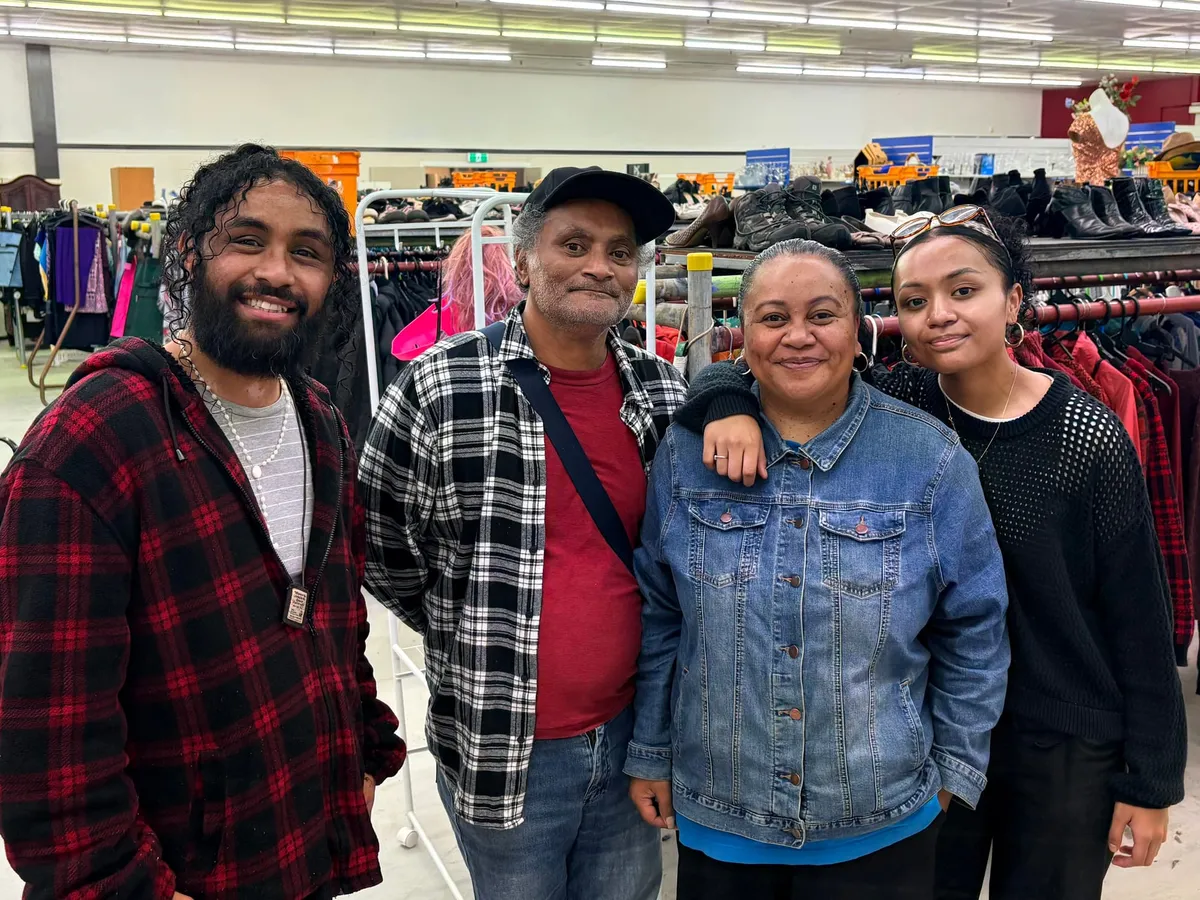
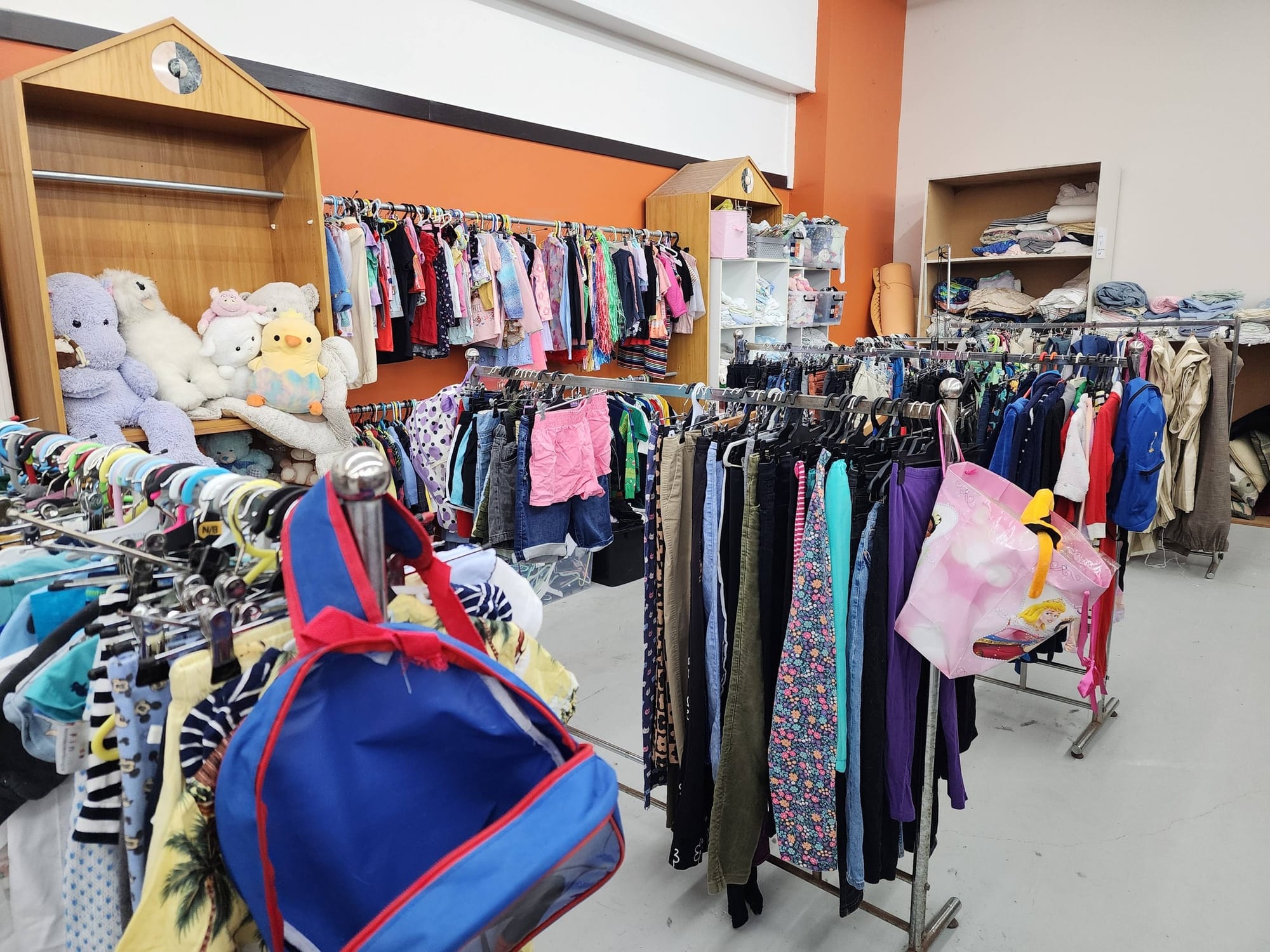
It’s called Manny’s Clearance, a thrift shop run by Lagi, Manny, Fred, and Aianna. They offer a second life for items they collect from their Junk N Dump business at affordable prices.
Manny’s is beautiful. It represents a joyous future built on community rather than overconsumption.
Our whole family loves Manny’s for so many reasons. It helps us live a life within planetary limits. When we enter their store, we’re enveloped by a community committed to taking care of one another.
In a Wellington battered by ever stronger storms in an ever warmer world, I’ve been ruminating about how we cope. Manny’s is how we do it.
Dignity to stuff
Walking into Manny’s is like walking into a lolly shop for scroungers like us. Hanni is a persistent deal-getter, and I find random old technology endlessly fascinating.
They’ve recently moved into an old supermarket that’s been sitting empty for 40 years at the Waitangirua Mall. Over a few weeks, they’ve breathed new life into the space.
You will find everything within their walls. Crockery, baby clothes, cameras, computers, CDs, couches. It’s all been rescued from landfill by their Junk N Dump team – they help with estates, office clear outs, downsizing, and spring cleaning.
Buying secondhand is a small but fun way to live a climate friendly life. New clothing is responsible for ~4% of the world’s pollution, mostly from manufacturing. Buying secondhand is a small but meaningful part of living without worsening a warming world.
Hanni and I have built a life around our finds at Manny’s. We’ve brought home things as small as washi tape and as big as an 1999 strawberry pink iMac. We’ve bought work clothes from Lagi and Manny. Our children will be dressed by stuff we found in their shop. Everything is in good condition, ready to be taken home and given a second life.
You never know what you’ll find when you walk in, but the joy that comes from a good find is a special high.
Lagi told me that she and Manny used to be in the food distribution business. Manny had an idea to get into rubbish collection and clearing out homes. “When I first heard rubbish business, I went hell no,” but Lagi came around to the idea.
Things got started quickly. At first, Manny and Lagi were donating everything to charities to distribute but the process was quite slow. For a while, they invited the community to rescue stuff from their garage on weekends. The Council wasn’t a fan, so they set up Manny’s as a proper shop.
Unlike buying new where slick marketing paves the way to you parting with your cash, the objects at Manny’s are left to speak for themselves.
Each object shines with character. They’re not sanitised to burn the bridge between their last life and now. Everything carries a story.
Dignity to our community
That inherent dignity extends onto the people who come through and spend their time at Manny’s, too. Lagi and Manny, along with their kids, offer dignity and aroha to everyone who comes through their doors.
Just before the new store opened, Lagi told me all she wanted was to give people joy. “It’s been really simple: love, respect, kindness.”
She didn’t need a slick PDF from a consulting firm to define the kaupapa of Manny’s: their values beam from the shop. They’re upheld by everyone who comes in, from students living in Newtown to families in Silverstream.
Lagi and Manny care about the people who come through their doors and their plans for the shop are guided by that care. “We’re turning one section into a commercial kitchen,” which the community can use for fundraisers for a koha. They make sure young families can buy clothes for their growing kids at prices that are affordable. Often the whānau at Manny’s will have food donated by locals that they’re passing on to those who need it.
For us, it’s feel-good. We can extend the life of something that someone put energy into making. But for someone who is choosing between clothing their kids and food on the table, it’s a godsend. Manny’s channels community love towards those who are in crisis in a way that feels mana-enhancing and dignified.
Months ago, I realised how radical Manny’s really is. Money flattens us. Chase profits alone and you deprive yourself of the depth, the wairua, the heart that comes from people who show up and care for one another. You lose the great gift of care and reciprocity to transactions.
When Manny’s announced they were moving shop, dozens of people showed up for weeks to help them move. They were there out of kindness and care. My sister-in-law organised the clothes, my grandmother-in-law wrote the signs, my mother-in-law swept the floors.
Because the family shepherding Manny’s shows up for all of us, we want to show up for them. No amount of money can offer the security that love and community provides.
The floods two weeks ago show just how fragile our world can be. The weather is unpredictable, and getting worse as more cars, trucks and cows pump ever more pollution into the air.
We need to turn off the tap of pollution, and in a small way Manny’s can help with that. Buying second hand clothes means no new manufacturing pollution to put a shirt on your back. Alongside solar panels and electric trains, it’s a key to a life lived within the limits of our planet.
But the world is already warmer. While we reduce our pollution to prevent the worst, we also need to weather the strengthening storms. People are the key.
While you wait for insurance to pay you out or the Government to announce a tiny funding package, who will house you? Who will keep you warm or help you get new clothes? Who will hold you while you feel the loss?
Community is and always will be the first to step up in a crisis: the first to help us up when we’ve fallen down.
It’s hard to cope through hardship, whether it’s a climate disaster or the quiet catastrophe of struggling to feed your family.
But if you find places like Manny’s, filled with people like Lagi, surrounded by a community dedicated to helping out, each crisis feels a little bit easier.
And the community I cherish that collects within its walls is why the world is worth saving.