
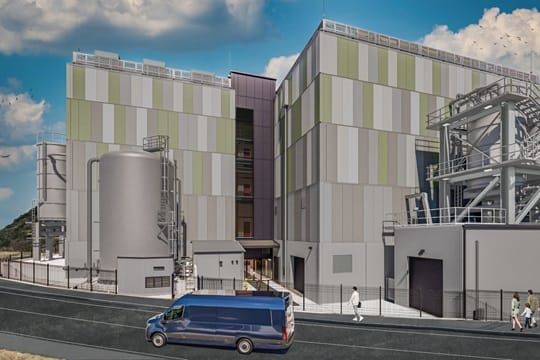

Last month, Deputy Mayor Ben McNulty defended the new Council’s climate credentials by pointing to the Sludge Minimisation Facility.
This facility takes sewage sludge and turns it into dry compost to save it from being pumped into the landfill.
The project was hailed as “our single biggest ever investment into climate change mitigation.” And it was described this way just before the Council proposed bike lane funding cuts.
Something stunk. I had to dig.
You see, Wellington City Council haven’t included hard numbers in press releases or web pages. So I asked the Council how much pollution was really being saved.
The figure is hilariously low. Their design partner Beca says that the sludge project will cut just 2,000 tonnes of pollution per year.
Wellington makes 951,338 tonnes of pollution a year – 475x more than the sludge project saves.
That means the sludge project will save less pollution each year than Wellington makes every 19 hours.
Oh, and it costs over half a billion dollars.
I asked the Deputy Mayor if he considered this a cost effective climate intervention. He pointed to a report saying the sludge project will cut ~5,400 tonnes of pollution annually.
Better, but not by much. If we believe the higher number, the sludge project would only save what Wellington makes every two days.
The Sludge Minimisation Facility is the biggest climate project by cost – over twice the cost of the bike lane rollout. But expensive doesn’t always mean effective.
The council needs to more than halve the city’s carbon pollution in the next four years, and this project is their way of showing commitment to this challenge.
With that $500m, the Council could build a bus lane long enough to reach Palmerston North. Or give 83,000 Wellingtonians a free e-bike. Or give 50,000 households $10,000 to electrify gas appliances.
Transport and burning gas creates two thirds of our city’s pollution. Addressing that shit would make a difference.
This is the meeting where I learned the Sludge Minimisation Facility is the city’s biggest investment into climate mitigation.
So why would Council invest in the Sludge Minimisation Facility?
Councillors Laurie Foon and Ben McNulty explained that most of Council’s personal carbon emissions came from landfill.
They want less rubbish going into landfill to shrink the impact. However, sludge disposal requires a ratio of one part sludge to four parts solid rubbish. They can’t reduce rubbish until there’s less sludge. For that reason, I’m glad the Council is undertaking this project.
What gets me is this is so clearly a waste reduction project with a climate cherry on top. The Sludge Minimisation Facility was never supposed to be a hallmark of our citywide decarbonisation strategy. Bike lanes were.
It stinks that sludge is put up as big climate action while bike lanes are put on the chopping block.

Bike lanes represent a massive opportunity for Wellington to become more affordable and climate friendly.
The happiest cities in the world are built around bikes. Bike lanes slash pollution and make it possible for everyone to get from A to B safely. No petrol required.
It doesn’t take much for bike lanes to outperform the Sludge Minimisation Facility on emissions. If a comprehensive bike network convinced just 2% of Wellingtonians to stop driving, it would prevent more pollution than the sludge plant.
The Deputy Mayor stressed that council is not “walking away from climate measures.” Hate to say it, but if the council cuts bike lanes, that is definitely walking away from climate measures.
Increasing bike use was a key part of the Council’s action plan to decarbonise in 2021. Defunding bike lanes would stall their own strategy. Doesn’t matter if the sludge plant saves two days of pollution.
A low carbon Wellington means transforming our city so everyone can get around safely without burning fuel. That future for Wellington is still possible.
Councillors are yet to cement the bike lane budget cuts. We have until 10 May to urge them to fund genuinely effective climate action: bike lanes.
I’ve made a template for you to use and I’d love if you contacted your councillors. It will take you five minutes.
Let’s not turn our future to shit. I mean, sludge.
Footnotes
For the nerds, here’s my working on alternative spend scenarios.
RE: 83,000 bikes. I found that you could buy 70,000 e-bikes at $5,000 each. On top of that, you can buy 13,636 cargo e-bikes for families, at $11,000 each.
RE: bus lanes. I based bus lanes off of the Harbour Quays bus lane project. It will cost $10m and create 2.6km of bus lanes. Half a billion at that price would get you 192km of bus lane, more than a trip to Palmy.
RE: fossil gas. Wellington Electricity estimates 55,000 gas connections in the whole Wellington Region. Lol. So you could easily decarbonise every gas household in Wellington City.
RE: bike lanes delivering better emissions reductions. The average New Zealander drives 11,500km every year, and the average New Zealand car emits 161g for every kilometre it travels. 2% of Wellington’s population is ~4,200 people. Assuming those are average drivers, if they went carless, collectively they would save 7,770 tonnes a year. And a lot of money on petrol at that.