Pothole killer – how trains can save the climate and our highways
Every pothole can be traced back to a transport system that chooses to use roads for things they’re not suitable for.

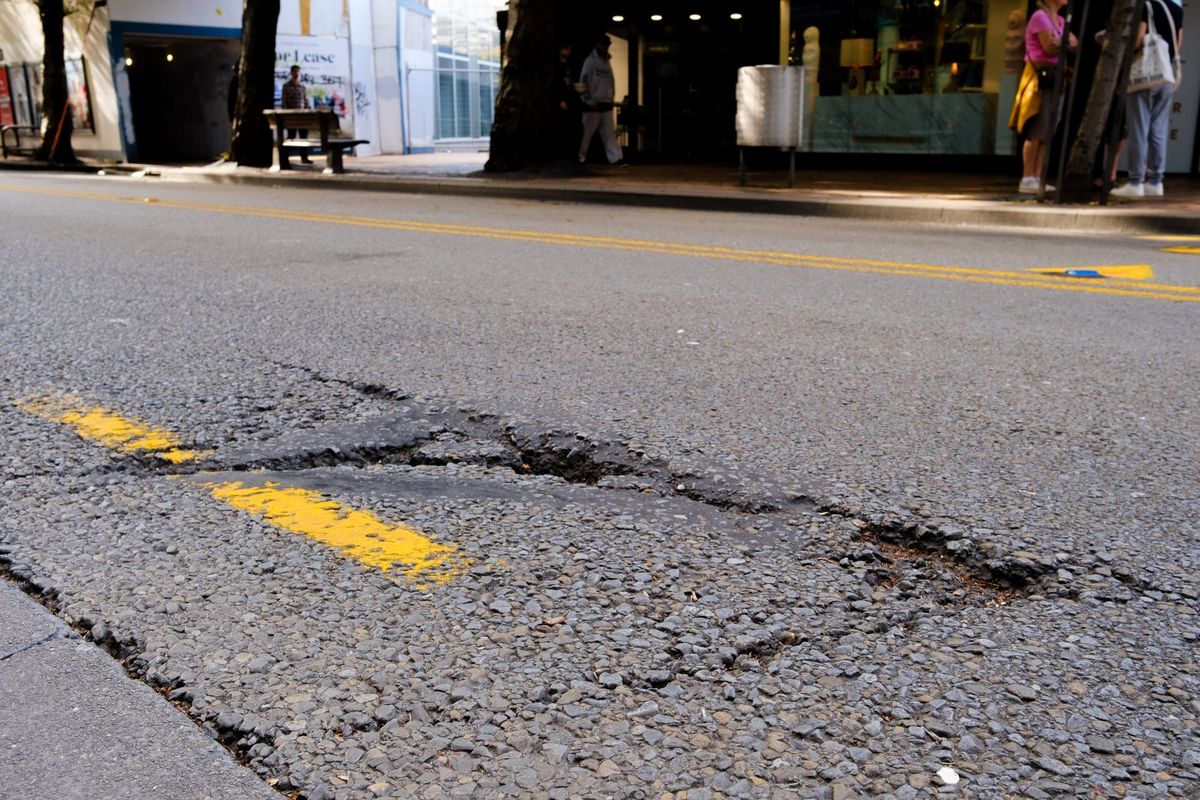
Potholes. Aren’t they a bastard.
On city streets, they’re a pain. On highways, they’re dangerous. Potholes are so infuriating to the average driver that National tried to win power by promising a 24/7 pothole hotline.
Potholes are a fact of life. Roads get used and over time, need repair. Like all infrastructure, maintenance is half the battle.
Every pothole can be traced back to a transport system that chooses to use roads for things they’re not suitable for.
Thankfully, we have what we need to vanquish the pothole dragon. Our mighty steeds in this battle? Trains. Let's explore why.
What causes potholes
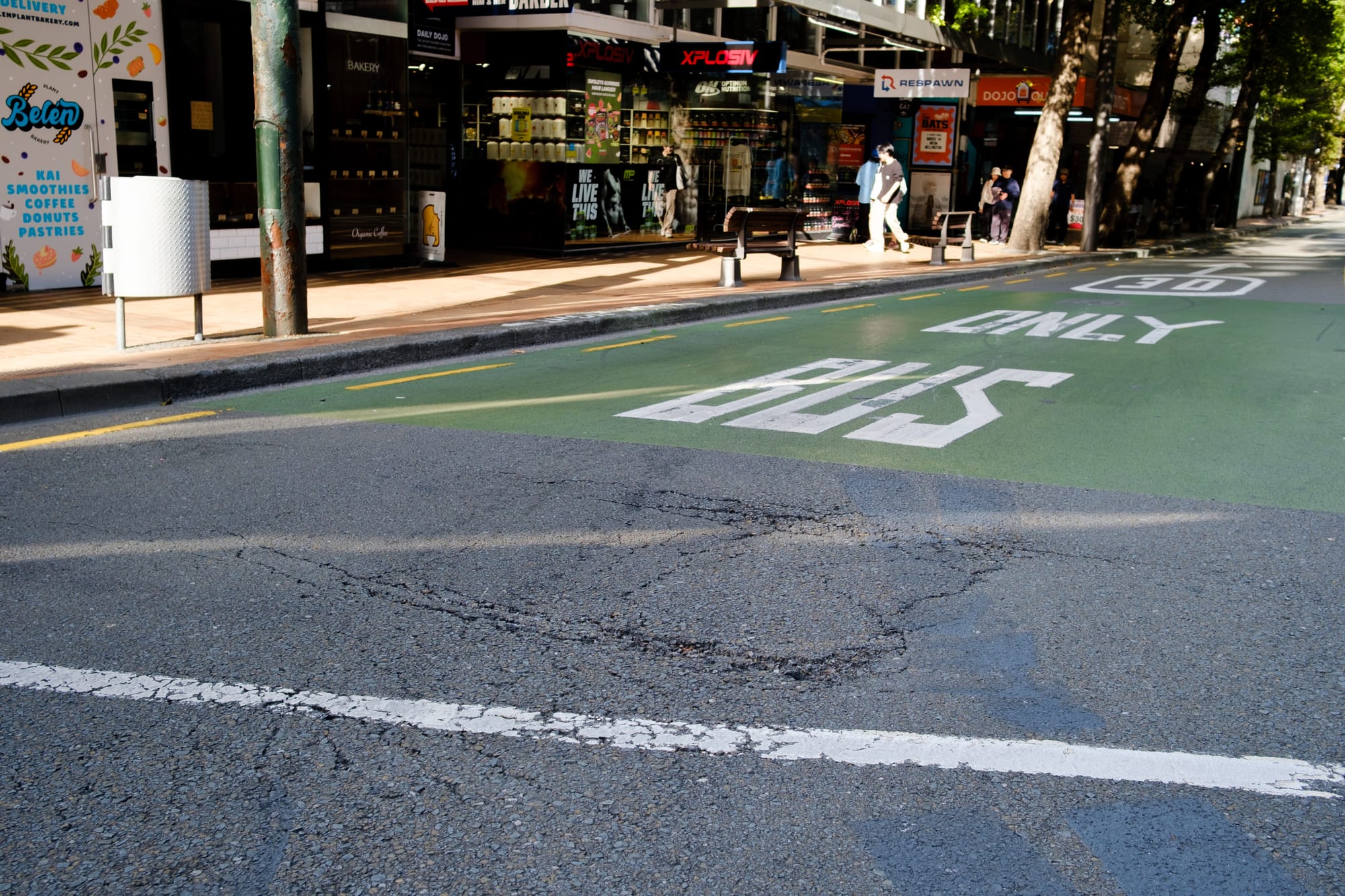
Simply put, potholes pock local roads and highways because when roads wear down from use, water gets in. That water breaks down the layers of the road and destroys the road surface.
Vehicle weight is one of the biggest causes of potholes forming. As a vehicle gets heavier, it creates exponentially more damage to the road.
Take, for example, my ass on a bicycle and someone in an average car. Me and my bike weigh about 120kg, and the average car weighs two tonnes. Each axle of the car carries nearly sixteen times more weight than my bike’s, but that weight does 77,160 times the damage. Transport engineers call it the Fourth Power Law.
Damage escalates further with trucks. One 50 tonne, nine axle truck does the same damage to a highway as 952 average cars.
Even though trucks account for just 7% of the distance travelled by vehicles in Aotearoa each year, trucks are responsible for 80% of road maintenance cost.
According to Greater Wellington Regional Council, two thirds of the cost of building new highways goes to making them strong enough to withstand heavier trucks. Roads of National Significance probably wouldn't be bankrupting the nation if New Zealand didn't use ultra heavy trucks for everything.
Smaller trucks are useful for local delivery and connecting uncommon routes. Trucks have an important role to play, but shouldn’t be carrying over 90% of freight.
If only we had a better way to move goods across the country? Won't someone please invent something?
Oh wait. We already did. It’s called a train.
The tilted transport system
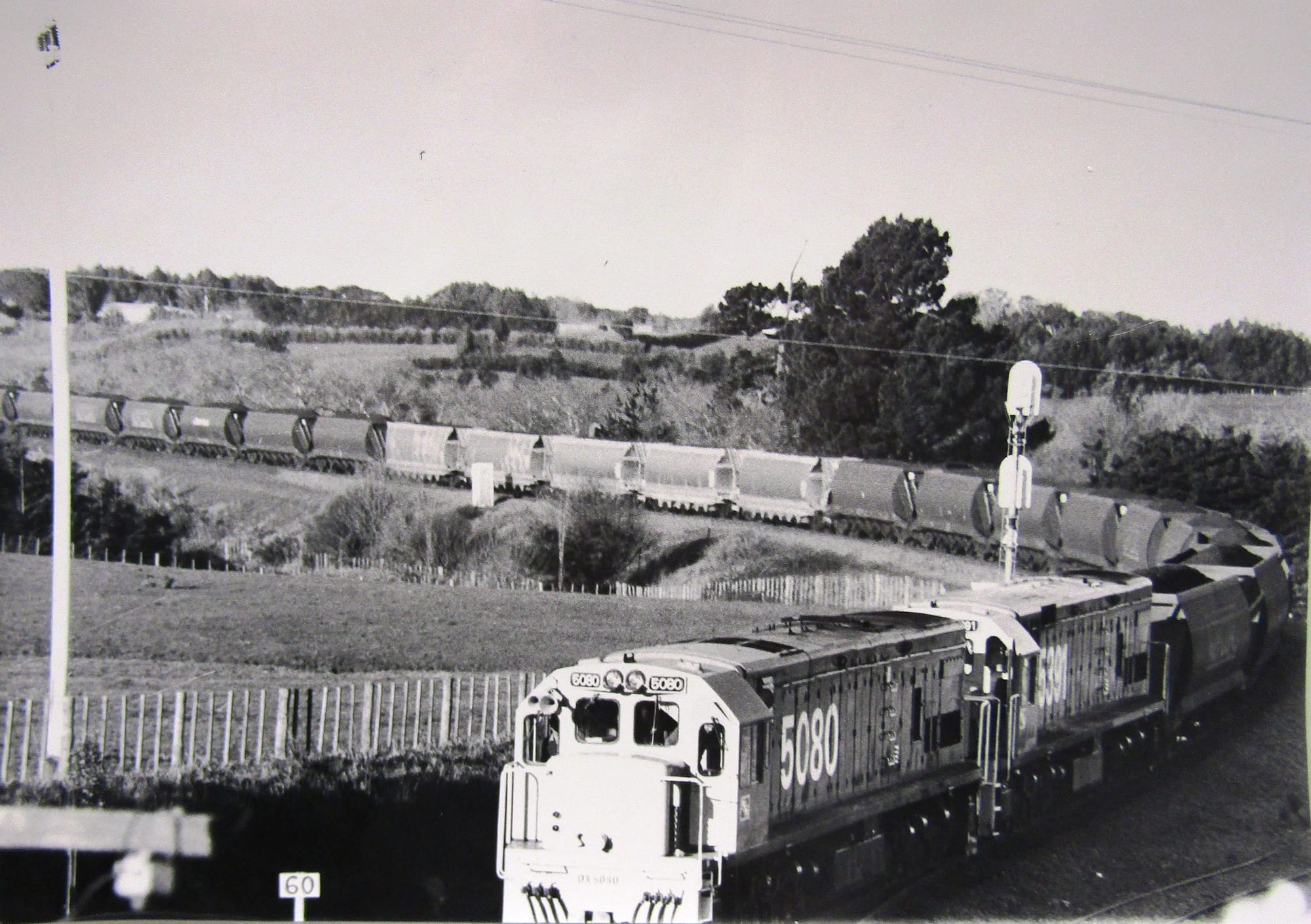
Trains are remarkably energy efficient. Diesel trains are nearly four times more efficient than a linehaul truck – and fully electric trains are even better. We have train lines that are available and abundant across the country – connecting Auckland to Wellington or Picton to Invercargill.
So why do we move so much by truck rather than train? In the mid 20th Century, trucks were highly regulated by Government. You couldn’t move freight long distances on highways, which kept freight on efficient rail. This was intentional to make the most of New Zealand’s different forms of infrastructure.
Then, Labour deregulated the whole system in the 1980s. Instead of government ”picking winners”, the market would. The deal was that road users would pay for all road maintenance, and rail would compete.
The playing field wasn’t leveled, it was tilted in another direction. You’d expect a 50 tonne truck to pay for all the damage it does to roads. They don’t.
According to The Future is Rail, the trucking industry will get a $1.4 billion annual subsidy next year. They want to see these subsidies go. It would incentivise freight to move on efficient diesel trains, or even electric trains. This would slash our diesel dependence, cut our carbon pollution, and save our highways from dreaded potholes.
In this system, trucks would bookend freight deliveries, connecting places where rail doesn’t reach.
Government has a responsibility to use every highway, rail line and shipping route for its strengths. Subsidising trucks to damage our roads when rail is right there just ain’t it. That’s the strategy that damaged our highways in the first place.
Potholes are a weeping asphalt sore symbolic of our tilted transport system.
Government already tried a hotline. They need a pothole killer.
Luckily, there’s one waiting at the station.