Digging deep on bus replacements

You're not going crazy. Bus replacements are getting worse.
Over the past couple of months, I've been collecting official information from the Greater Wellington Regional Council about our train services.
They've provided data on how many people were on each train service and bus replacement since July 2017. They've also shared how many bus replacements have been run every day since July 2017.
Armed with that data, and some council order papers, I started digging into how our trains are doing.
Right now, our train system is suffering. Last year, patronage was down 6%. KiwiRail's lengthy repairs are causing real trouble for Metlink and passengers.
Today we're going to explore how bus replacements have increased since 2017, why it's happening, and why I'm feeling uneasy about the future.
This data is important, so I've made it easily accessible for data nerds. Check out the Welly Climate Nerd website to scrounge all my annoying Official Information requests.
Bus replacement-palooza
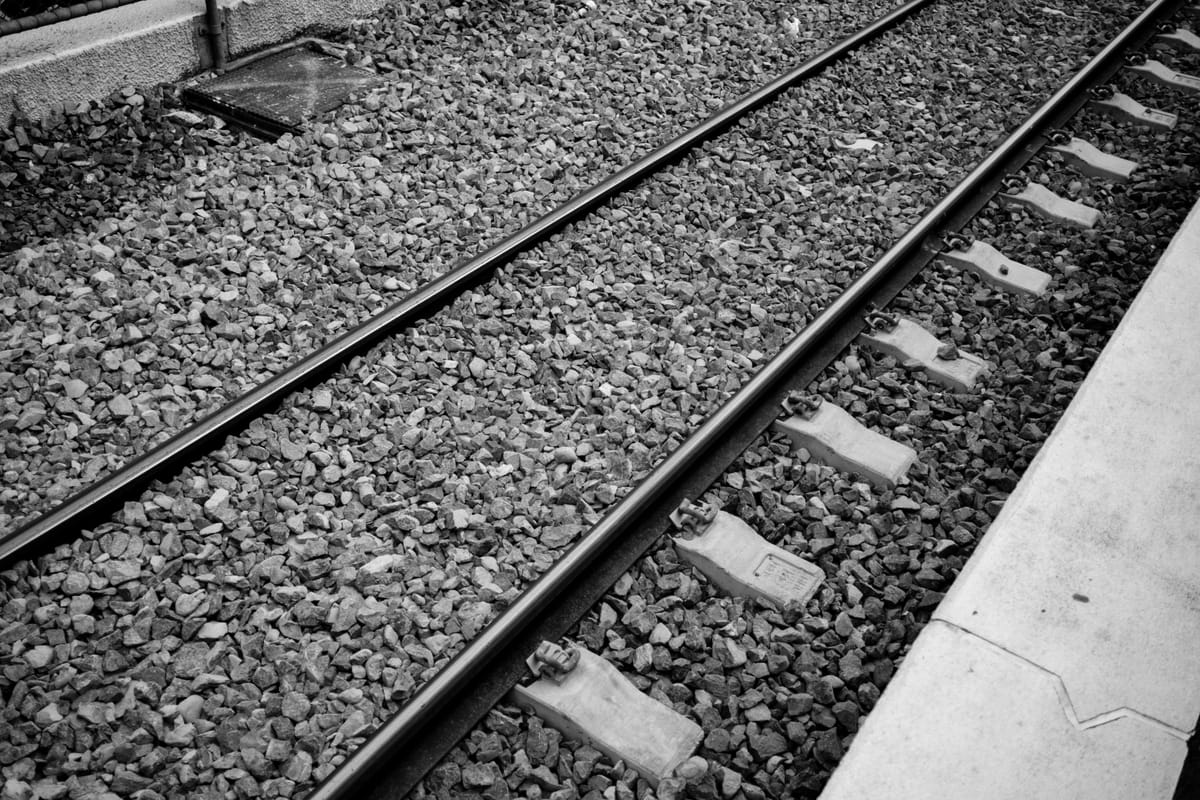
Bus replacements are a necessary part of maintaining a train network. When the rail needs repair, moving trains cannot be there. Bus replacements are planned to let KiwiRail have time to fix old tracks, replace sleepers, and improve the network to run more trains in the future.
In 2017/18, one in every 17 train services were replaced by buses. Just under 6% of services.
Seven years on, one in five trains were replaced by buses. Around 20%. This is having significantly harmful effects on the network.
There are bus replaced trains most days on Wellington’s train networks. In 2024/25, the Kāpiti line had a bus replaced train at least once per day for two thirds of the year.
Not everyone is affected equally though. KiwiRail and Metlink protect peak commuters from buses. Wellington’s rail is built for getting to and from work, rather than being useful for all your transport needs.
Unfortunately, since work travellers bear none of the cost of bus replacements, everyone who uses the train to visit family, do errands, or go to weekend sports hold the heaviest burden.
Scarily, Wellington functionally didn't have a weekend train schedule in 2024/25. We had a bus schedule that was replaced by trains less than half the time. On the Kāpiti and Wairarapa lines, buses outnumbered trains nearly two to one on weekends.
When KiwiRail closes the lines on weekends, it’s common practice to stop all train services. When over three quarters of the trains are replaced by bus, the number of passengers drops by two-thirds or more.
For a while I was thinking this was just the norm: it's not. Something happened in 2019.
The nuance behind the disruption
30 May, 2019. It was Budget Day, and I was temporarily stationed in the Beehive. I was working for Grant Robertson, who was the Finance Minister at the time.
Because my job was in his electorate office, I wasn't privy to any secret squirrel budget announcements. So, I was pleasantly surprised to see a $1 billion boost for KiwiRail to fix our failing train networks.
With that funding, KiwiRail got to work. And that work meant a lot of bus replacements. In the previous financial year, just 8% of services were bus replaced. With the funding to do crucial maintenance work, that replacement rate jumped to nearly 12%.
It has not let up since 2019. In the ensuing six years, we've seen disruption grow and grow and grow. Repair is necessary, therefore disruption is too.
But this disruption is causing our train system to suffer. Train travel is down 6% year on year in Wellington, in the very decade we need it to be increasing rapidly. Remote work and a shitty economy are two big factors, but bus replacements are the icing on the cake. Bus replaced services drive people to drive themselves.
Compare the average train schedule of a Saturday to a bus replaced Saturday. When the buses are on, passengers drop by a third to nearly half.
Those who are left are those without other choices: people without cars, the elderly, and children. I compared 2024-2025 bus replacement passengers with regular rail passengers and 47% of passengers on bus replacements are children, students, the poor, the disabled, and the elderly. That’s compared to 27% on rail.
The disruption is necessary, but it's completely inequitable. The shittiest services are falling on those who have the fewest transport choices. Instead of rewarding those who have built a life around the train, they're being disproportionately punished.
Plus, it's putting Metlink into a financial crisis. 60-78% of weekends feature bus replacements. It's enough to lose Metlink millions in revenue.
By my estimation, Metlink lost 1.5 million passenger journeys because of bus replacements in 2024/25. If every one of those journeys were to Takapu Road, at off peak prices, Metlink sacrificed $4m in revenue for disruption it has no control over.
That kind of loss is causing fares to rise and the Regional Council to consider cutting budgets for public transport, again in the decade that we need more public transport options.
And unfortunately, KiwiRail expects to be doing this work for another 12 to 16 years based on the current renewal funding that it has. It will take more funding to fix the network faster. The $3.8b of funding for expanding highways in the central city could be used. Maybe? Please?!
This is such a messy way to fix the network, and all the while KiwiRail and the Beehive are burning trust in Metlink.
The erosion of trust
Greater Wellington has lofty goals for Wellington's public transport. They want public transport to cut our carbon pollution and reduce the number of cars on the road within the next decade.
Lots of decisions are being made to achieve this goal. Making it easier to pay with your debit card rather than Snapper. Encouraging city councils to build bus lanes. Setting out visionary plans for a rail system that runs trains every six minutes.
All of these ideas, and the viability of these goals, are built upon fundamental trust in the system. Without it, public transport withers.
That is the worst part of these bus replacement statistics to me. They highlight how the system assumes public faith grows on trees.
A network that treated public transport passengers with dignity would not let rail get this neglected in the first place. If it treated trust as the key to system success, it wouldn't let repairs drag on for decades with no clear benefit on the other side.
There appears to be a shared delusion that the second our rail network is fixed in the 2040s that suddenly everyone who was burned by it for 20 years will jump into Metlink's arms and ride the rail into the sunset.
That ain't gonna happen. Having a functional system is the first step towards transformation, not the last.
The longer this bus replacement hell lasts, the more people are discouraged to build their lives around trains. In order for people to transition to lower carbon lifestyles, they have to trust they won’t get screwed over by choosing a greener alternative.
The erosion of rail reliability can undermine everything else that a great public transport system can offer. What developer will build a six-storey apartment block near Waterloo if the trains are cancelled 20% of the time?
Our rail needs more funding, and our transport system needs an overhaul. Any system that treats train travellers with this much disregard is not fit for the mission.
Until the system and funding changes, trust will burn and Wellingtonians will suffer for it.
 Kasey McDonnell
 Kasey McDonnell
How I calculated some of this stuff
I calculated lost fares by using Claude Code to estimate the average lost patronage per line on a bus replacement day compared to a similar day when trains were running. In FY24-25, the average net patronage loss per BR day was:
- Kāpiti (KPL): −2,912 passengers across 227 BR days
- Hutt Valley (HVL): −2,001 passengers across 230 BR days
- Johnsonville (JVL): −1,160 passengers across 182 BR days
- Wairarapa (WRL): −710 passengers across 243 BR days
- Network average: −1,706 passengers per BR day
I then multiplied each line's average by its BR day count and summed the total lost passengers (~1.5 million). Multiplied by $2.50 (what you would pay to travel to Takapu Road at off peak hours in 2024/25) — about $3.8 million in lost fare revenue.
Claude Code also helped me do data analytics (like percentage of bus replaced services compared to total services) on some chunky spreadsheets. Since this is my first time using Claude Code for this stuff, I verified its claims and found it was accurate.